Wilson Point Sunrise Guide: Everything You Need to Know Before You Go (Including What Nobody Tells You)
Wilson Point is Mahabaleshwar's highest point and its most cinematic sunrise experience. This honest guide covers arrival timing, jamun shot vendors, fog behaviour, chai stalls, photography tips, and how to actually experience the sunrise rather than just see it.
About the author
Meera Kulkarni
Food and market writer
Focuses on market walks, local food, and the everyday flavours of Mahabaleshwar.
Quick take
This guide is written for travelers planning a Mahabaleshwar trip around villas, food, viewpoints, and seasonal timing. Use the table of contents to jump between the sections that matter most.
I have watched the sunrise from Wilson Point eleven times across different seasons and different years. The first time I was twenty-three, visiting Mahabaleshwar with college friends, and someone set an alarm for 4:45 AM as a half-joke. We nearly didn't go. The blankets were warm and the room was dark and the idea of climbing into a cold car in the dark felt absurd. We went anyway, grumbling the whole way.
I haven't been able to explain that sunrise adequately to anyone since. Not to people who've never been there. Not to people who ask whether it's worth waking up for. I end up saying yes, firmly, and hoping they trust me enough to find out for themselves. This guide is my attempt to make the Wilson Point sunrise experience as accessible and as real as possible — not the postcard version, but the actual one, with the fog and the vendors and the cold and the moment when the light comes and the valley below turns gold and everyone goes quiet at once.
What Wilson Point Actually Is
Wilson Point, also called Sunrise Point, is the highest peak in Mahabaleshwar at approximately 1,439 metres above sea level. It sits on the northeastern edge of the plateau and faces east across the Sahyadri ranges — which is exactly why the sunrise view from here is what it is.
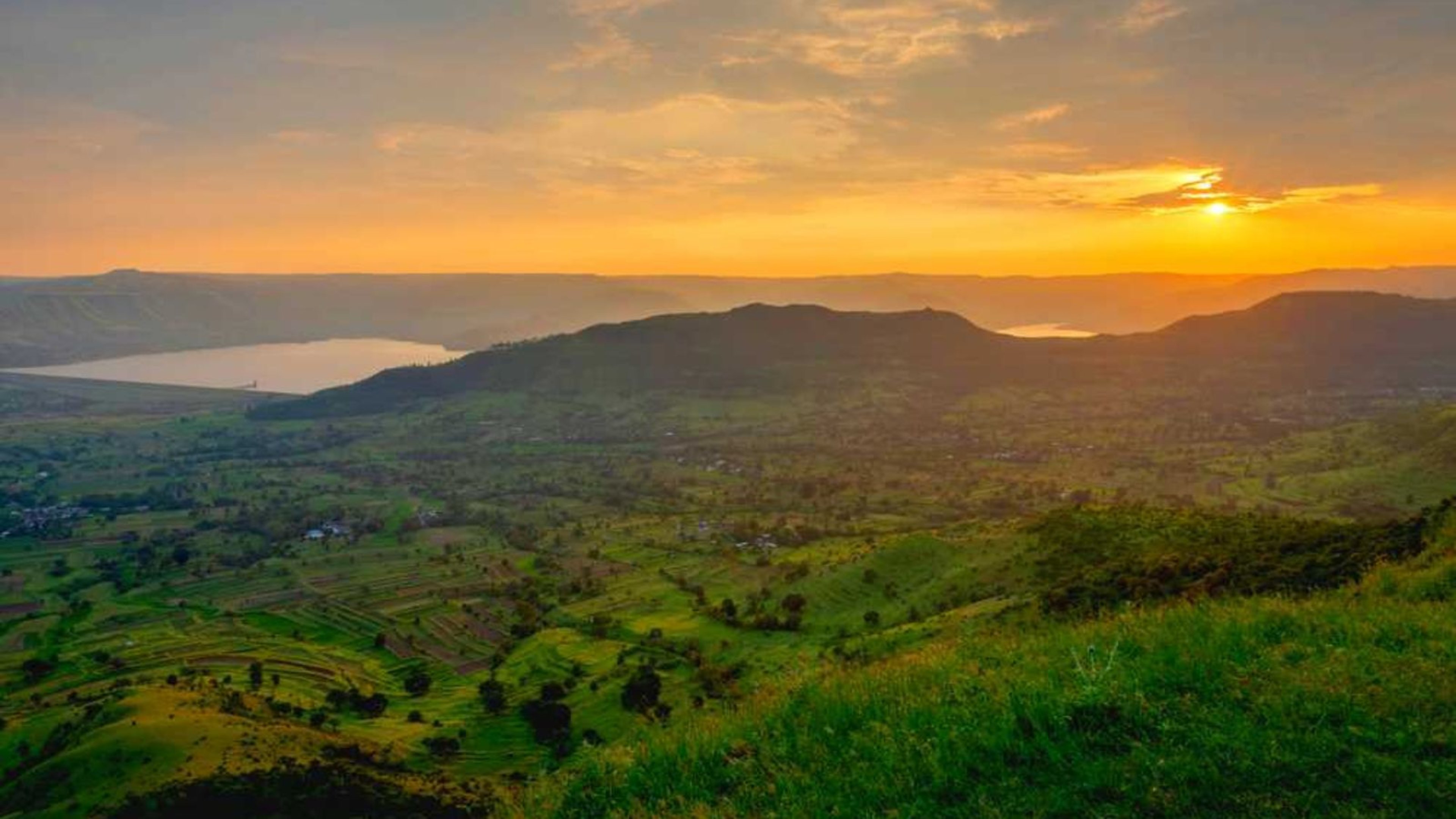
Named after Sir Leslie Wilson, a former Governor of Bombay during the colonial era, the point's history is less important than what its geography does at sunrise: positions you above a valley system that fills with fog overnight and then drains that fog in layers as the sun rises, creating a spectacle that changes minute by minute across the two hours either side of dawn.
The viewing area at the top includes a small observation platform, flagpoles, and enough open space for several hundred people on peak mornings. Vendors set up along the approach path. There is a small parking area at the base of the final climb. And there is a narrow road leading up that can be driven in darkness but requires care — it is the kind of road where you move slowly and let the curves reveal themselves.
Timing: The Non-Negotiable Part
You must arrive before the sun. This sounds obvious. People consistently underestimate what it means in practice.
Sunrise in Mahabaleshwar varies by season: roughly 6:15 to 6:30 AM in October and November; around 6:45 to 7:00 AM in December and January; pulling back to 6:30 to 6:45 AM through February and March; approximately 6:00 to 6:15 AM in April and May; and around 6:00 AM during the monsoon months, though sunrise is typically obscured by cloud cover.
You want to be at the point at minimum thirty minutes before sunrise. In most seasons this means arriving before 6 AM, which means leaving your accommodation by 5:15 to 5:30 AM at the latest.
The reason for arriving early is not just about being there for the sun clearing the ridge. It is about being there for the pre-sunrise phase — when the sky does its slow transition from black to deep blue to lavender to orange, and the valley below fills with a quality of darkness that becomes lit from beneath as the sky brightens. It is like watching something develop. By the time the sun actually appears, you have already been watching a show for forty-five minutes.
If you are staying at a villa close to the Wilson Point road — properties on the northern side of the plateau near the main sightseeing belt — your drive time is ten to fifteen minutes. If you are staying near Panchgani or toward Mapro Garden, add twenty to twenty-five minutes.
The Drive Up at 5 AM
The road to Wilson Point is narrow, uphill, and bordered by forest on both sides. At 5 AM it belongs to a small group of people: the early sunrise-chasers like you, a few local vendors already making their way up with equipment, and the occasional biker whose engine sound seems impossibly loud in the pre-dawn quiet.
The forest at this hour is a specific dark — not threatening, just deep. The headlights pick up the road and the trees on both sides and occasionally the eyes of an animal watching from the treeline. Small deer are not unusual. Peacocks, harder to spot in the dark, are also here.
The air hits you when you step out of the car. Even in November, which is not cold by any Himalayan measure, the Wilson Point air at 5 AM carries a specific bite. It smells of damp leaves and mountain rock and something faintly floral that I've never been able to identify definitively. Carry a jacket. Not a light shawl — an actual jacket. Even in March, you will want it. The wind at the point is consistent and cold in the early morning regardless of season.
The Vendors: The Unsung Part of the Experience
Before you reach the main viewpoint — along the path from the small parking area — a line of vendors sets up in the dark. They arrive before you do, sometimes by an hour. They carry simple equipment: a gas stove or charcoal setup, a large vessel for chai, a collection of small glasses, and in season, the jamun.
The Jamun Shot Vendors
Jamun — the Indian blackberry — is a dark purple fruit with an intensely tart, slightly astringent flavour that coats your tongue and stains it purple for about twenty minutes. The vendors press it fresh and sell it in small glasses for twenty to thirty rupees each.
Drinking a jamun shot at Wilson Point at 5:30 AM in the cold, with the sky beginning to lighten behind the Sahyadri ranges, is one of those micro-experiences that disproportionately occupies memory. The tartness is bracing in the best way. The cold glass against cold fingers. The vendor — usually an older man or a young boy helping his father — handling transactions with the unhurried efficiency of someone who has done this five hundred times.
Jamun shots are seasonal, roughly July through October when the fruit ripens. If you are visiting outside this window, the vendors typically sell strawberry juice shots between January and March, or simple lemon-ginger water. All are worth trying. Spend the thirty rupees regardless of the season.
The Chai Stalls
Two or three chai vendors set up along the path and at the viewpoint itself. The chai is strong, very sweet, milky, and it comes in a clay kullad if you are lucky. What makes it remarkable is the context. Drinking it while facing east as the sky starts to colour above the Sahyadri ranges turns a simple cup of tea into something else. Throw the kullad in the bin provided afterward, as intended, and watch it happen.
The Sunrise Itself: A Seasonal Guide
Winter Sunrise — November Through January
This is the most dramatic Wilson Point sunrise experience. The nights are cold enough to produce thick valley fog. By 5 AM, the valley below is invisible — entirely erased by white cloud sitting at around 1,100 to 1,200 metres, well below the point.
As the sky brightens, the fog does not immediately clear. Instead it does something more interesting: it catches the first light from above and glows. The top surface of the fog cloud turns pink and gold while the valley below it remains dark. It looks like the world has been replaced by a glowing ocean.
Then — gradually, over twenty to thirty minutes — the fog begins to drain down the valleys as the sun warms the plateau. Patches of the valley below emerge through gaps in the cloud. Trees become visible. A road appears. A rooftop. It happens in fragments, like the valley is being assembled piece by piece as you watch.
This is the Wilson Point winter sunrise. It is the best version.
Monsoon Sunrise — June Through September
Monsoon sunrise at Wilson Point is a different experience and one that fewer people specifically seek out — which means those who do often have it largely to themselves.
The sky at monsoon sunrise is rarely clear. What you get instead is a dynamic cloudscape: layers of monsoon cloud moving at different speeds and directions, backlit by a sun that appears only in glimpses. When the cloud breaks and the sun punches through for thirty to sixty seconds, the light quality is extraordinary — intense and golden and gone almost before you've registered it.
The valley on a monsoon morning is a dramatic grey-green, the forest saturated with water, waterfalls visible as thin white lines on distant hillsides. Rain is possible at any point. Carry a rain jacket. The experience of being at Wilson Point in monsoon, inside the cloud rather than above it, is something that the October photographs cannot convey.
Post-Monsoon Sunrise — October Through Early November
The monsoon has just finished. The landscape is intensely green, the air is clean of the haze that builds through the dry season, and the waterfalls are still running. The sunrise from Wilson Point in this window shows you the Sahyadri at their most vivid — every hillside green, every valley filled with the particular clarity that comes in the weeks immediately after the rains stop.
Crowds are lighter than peak winter season. The vendors are back after their monsoon break. The jamun may still be around.
Photography at Wilson Point
For photographers — phone or dedicated camera — Wilson Point is a specific challenge because the dynamic range of a sunrise is extreme. The sky is bright; the valley below is dark. Most cameras handle this poorly by default.
Arrive forty minutes early. The sky transitions fastest in the ten to fifteen minutes before and after actual sunrise. If you are only there for the moment the sun clears the ridge, you have missed most of the show.
Face east, but do not only face east. Some of the best light at Wilson Point happens when you turn around and look west — the pink light hitting the plateau behind you, the trees catching it from the side. The west-facing view at sunrise is consistently undershot by visitors.
For phone cameras: expose for the sky, not the foreground. Tap the area just above the fog layer to lock exposure. The valley will be dark initially — let it be. A blown-out sky with visible ground is worse than a dark valley with a properly exposed sky.
For DSLR and mirrorless: bracket exposures by one stop in both directions. The dynamic range between a bright sunrise sky and a fog-filled valley is too wide for a single exposure in most sensors. The fog formations between 6 and 7 AM on winter mornings are the most photogenic element at Wilson Point — more interesting than the sun itself. Turn your camera down into the valley and shoot the fog patterns.
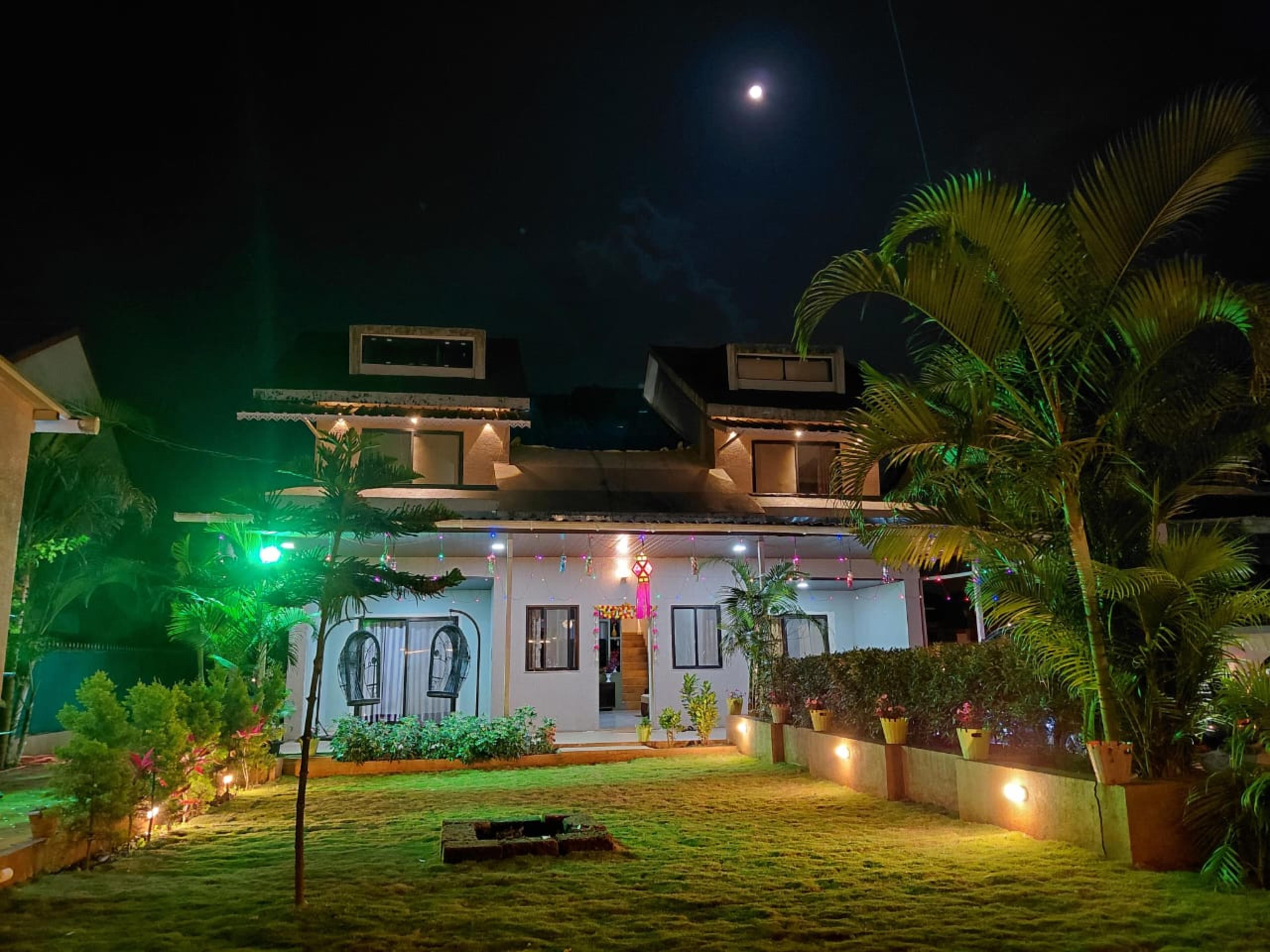
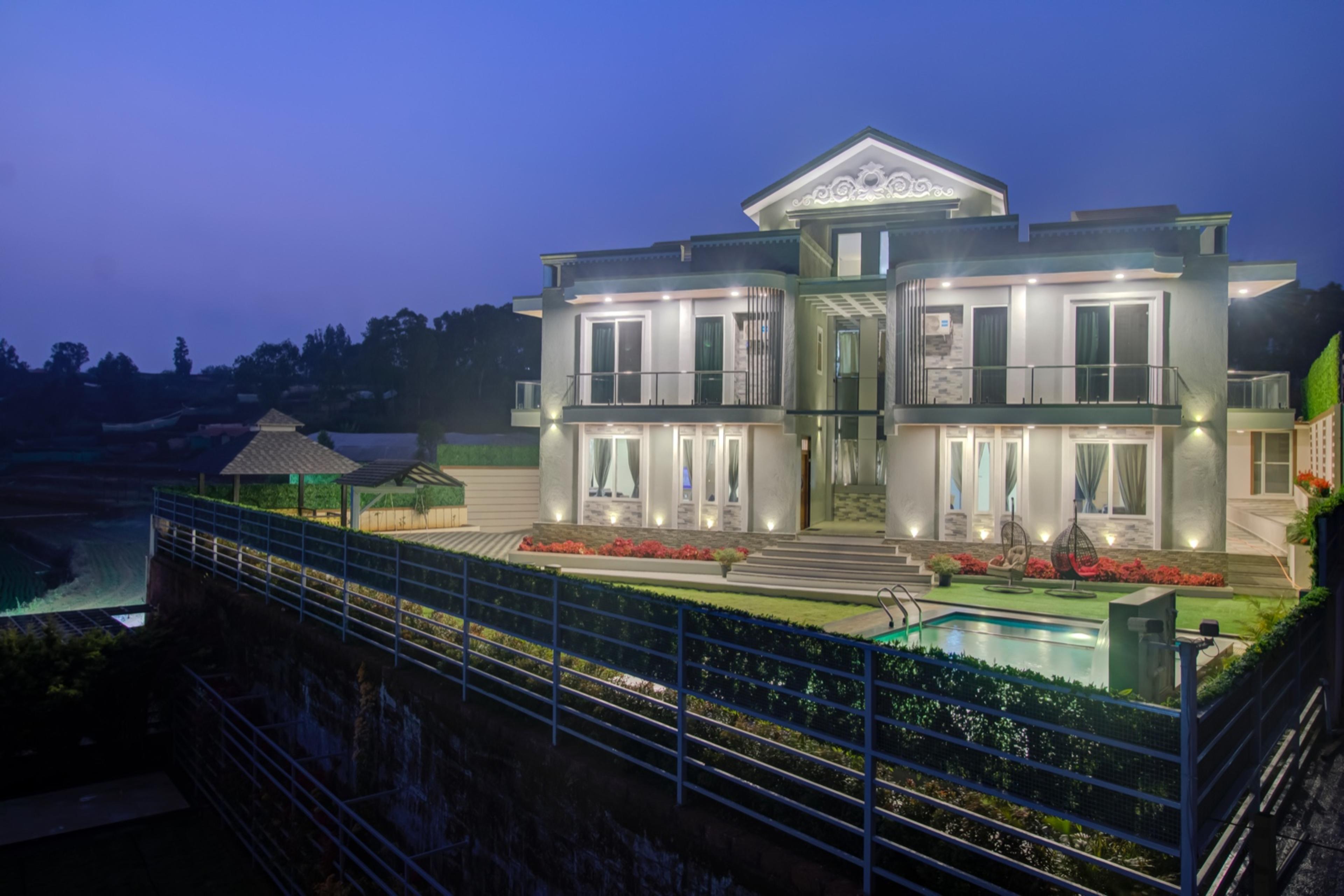
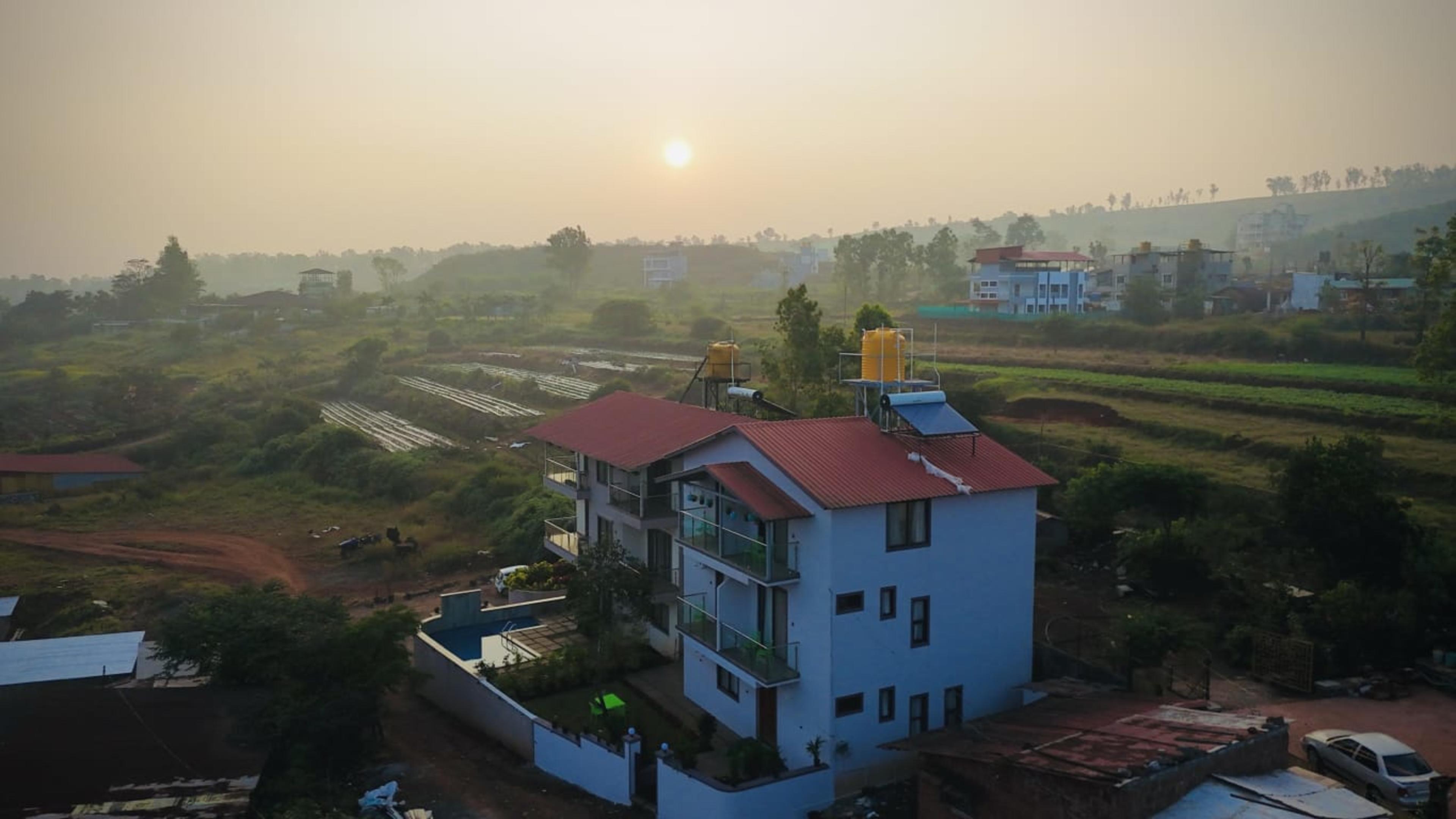
Villas near the Mahabaleshwar plateau road allow you to reach Wilson Point in under ten minutes from your front door. Browse private villas on Mahabaleshwar Villa Stays and filter by proximity to the main sightseeing belt.
After Sunrise: Two Hours People Waste
Most visitors watch the sun clear the ridge, take photographs for ten to fifteen minutes, then turn around and drive back. If you have a packed schedule, this is a reasonable choice. But the thirty to sixty minutes after direct sunrise are often the most interesting — the light shifts from orange-pink to gold, the fog starts to move in visible currents, and the crowd that arrived at 6:30 to 7:00 AM has partially departed.
Stay for the movement of the light across the valley. Stay long enough for the chai to cool slightly and be worth the second cup. The viewpoint at 7:30 AM on a clear morning is often better than at 6:30, and the parking situation has also eased by then.
Old Mahabaleshwar After Wilson Point
Leaving Wilson Point before 7:30 AM gives you a full morning. The Panchganga Temple in Old Mahabaleshwar is 6 km from the point and worth the short drive. At 8 AM it is quiet, the priests are unhurried, and the five-river confluence inside the temple complex has a particular stillness after the energy of the sunrise crowd. This transition — from the dramatic to the contemplative — works well as a morning sequence.
Breakfast at Mapro Garden
Mapro Garden opens at 9 AM. Arriving here after Wilson Point, with the appetite that comes from a 4:45 AM wake-up and two hours of cold valley air, makes the Mapro pizza and fresh strawberry milkshake feel genuinely earned. Weekday mornings before 10 AM, the garden is quiet and the food is at its freshest. This is the version of Mapro Garden worth visiting — not the Saturday afternoon one.
Common Mistakes at Wilson Point
Arriving after 6:30 AM on a weekend and expecting the experience to match the photographs — it will not.
Dressing for a warm Mahabaleshwar afternoon when it is actually a 5 AM ridgeline in December — the temperature difference between your villa at 11 AM and Wilson Point at 5:30 AM can be eight to ten degrees, plus wind.
Skipping the jamun shot because it does not look impressive — spend the thirty rupees.
Expecting fog every morning — fog at Wilson Point is common from October through January but not guaranteed. Clear valley mornings without fog are still worth the sunrise; the light and the far-distance views are different but not inferior.
Leaving before the light fully develops — the fifteen minutes after the sun clears the ridge are often the best of the entire morning. Stay for them.
Need a villa base for this trip?
The best travel blogs work when they point to a real booking decision. If this article helped you plan the route, match it with the right villa category before you finalize dates.